Steam Cleaning
A controlled, heat-led method used to loosen and remove surface build-up with less reliance on harsh force.
Compare steam cleaning and blast cleaning for building restoration, and learn which method is best for protecting façades, surfaces and long-term property value.
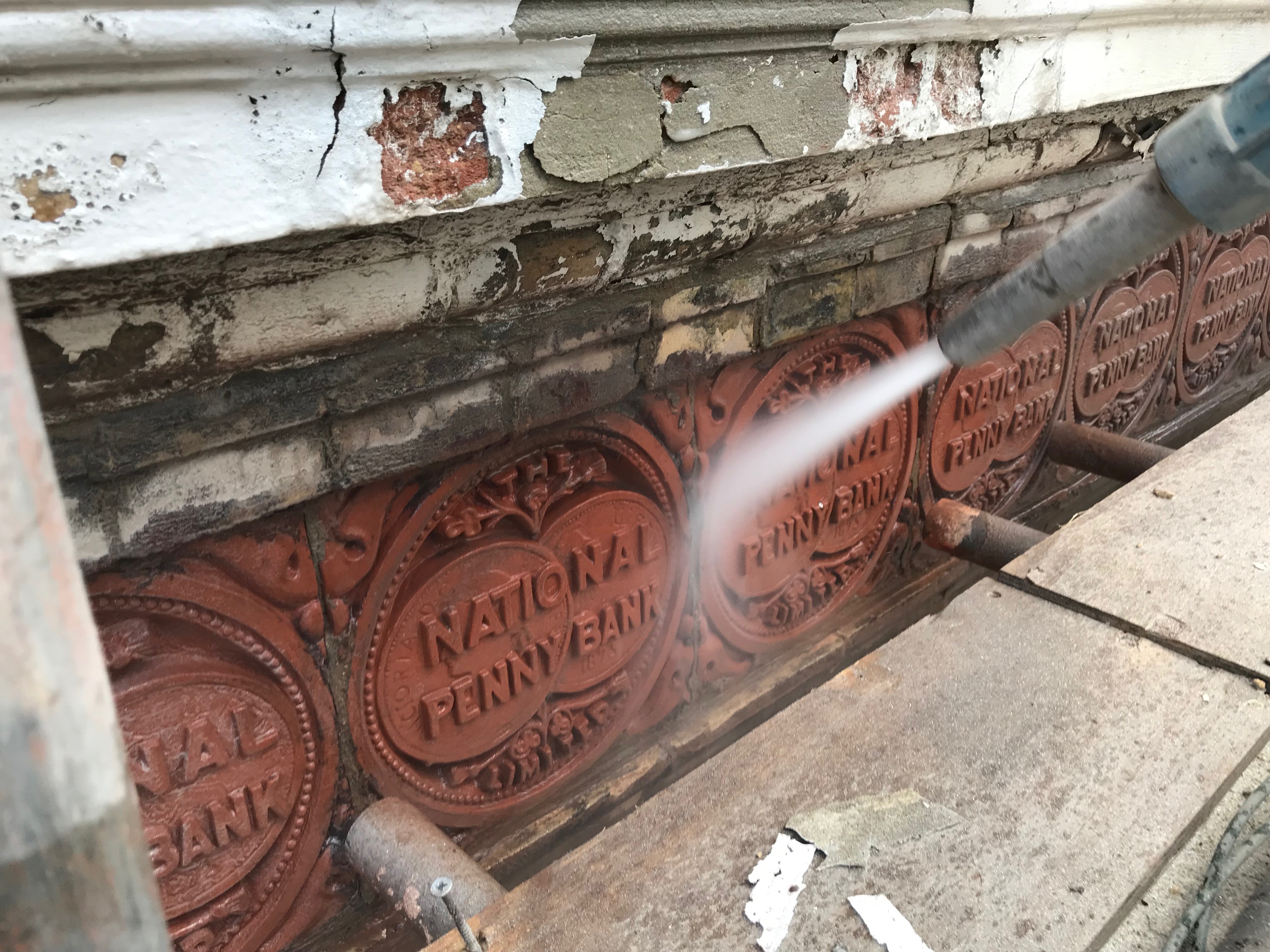
When restoring a commercial building, choosing the right cleaning method is just as important as the cleaning itself. The wrong approach can damage surfaces, strip finishes, force moisture into vulnerable areas or leave the building with an uneven result. The right method, however, can remove years of staining, pollution and surface contamination while protecting the integrity of the material beneath.
Two of the most common methods used in external building restoration are steam cleaning and blast cleaning. Both can be highly effective, but they are not interchangeable. Each method is suited to different materials, levels of contamination and project outcomes.
For building owners, contractors, developers, managing agents and facilities teams, understanding the difference can help ensure the correct approach is selected from the start.
Every building is different. A modern cladded commercial unit will not respond in the same way as a heritage brick façade. Natural stone, brickwork, render, metalwork, concrete, glass and coated surfaces all have different characteristics.
Some materials are porous. Some are delicate. Some may have historic value. Others may have coatings or finishes that need to be protected. The level of staining can also vary significantly, from light surface dirt through to heavy pollution, paint, carbon deposits, algae, moss or ingrained grime.
This is why professional assessment is essential. Before any work begins, the building should be reviewed carefully to understand the surface condition, material type, contamination, access requirements and desired finish.
Steam cleaning and blast cleaning both have an important place in restoration, but the correct method depends on what the building needs.
Steam cleaning is a controlled cleaning method that uses high-temperature steam or superheated water to remove dirt, biological growth, staining and surface contamination.
Unlike aggressive pressure washing, steam cleaning can clean effectively at lower pressure. The heat helps loosen contaminants from the surface, reducing the need for harsh chemicals or excessive force. This makes it a popular choice for delicate surfaces, heritage buildings and areas where material protection is a priority.
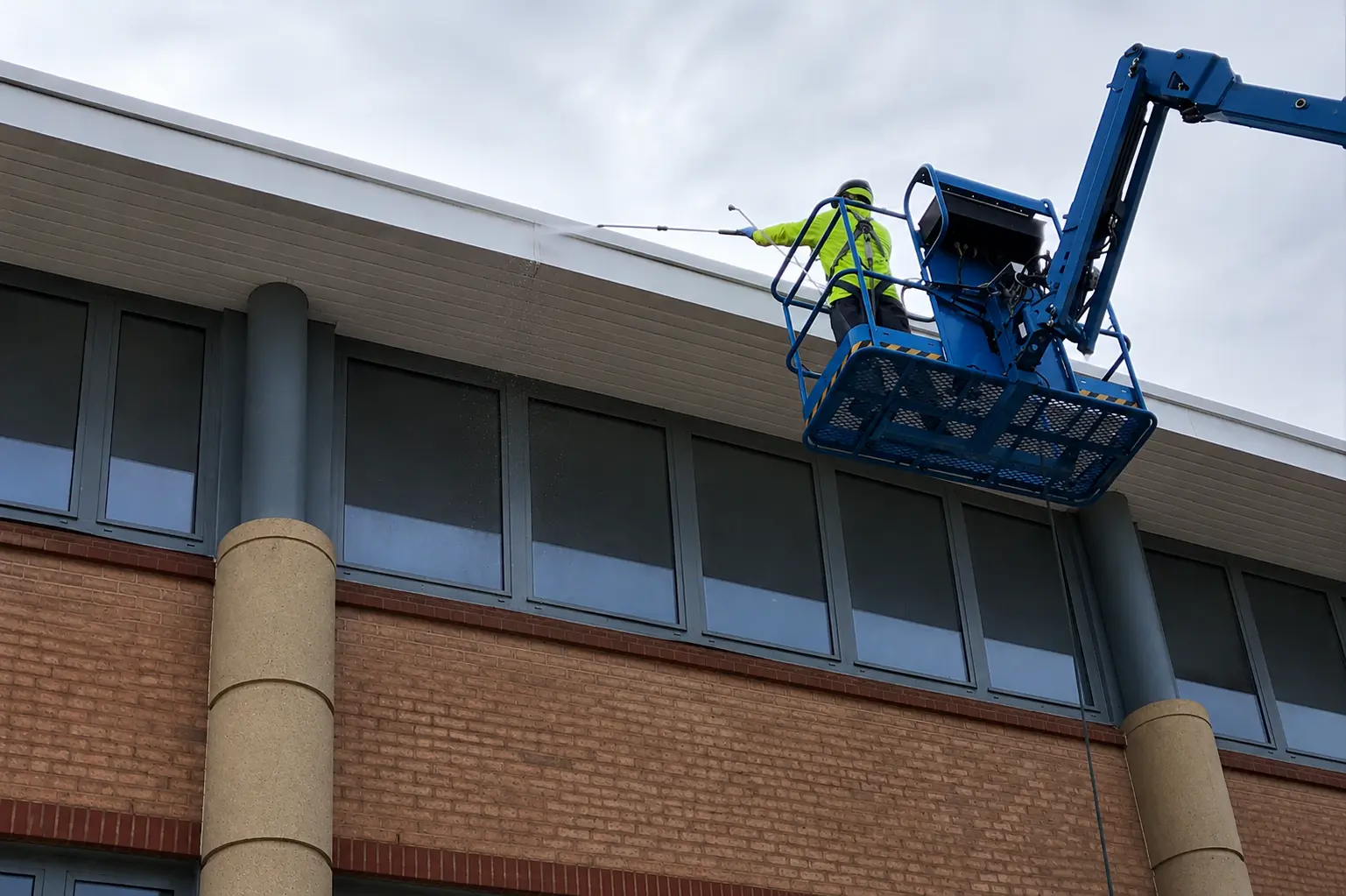
Steam cleaning is often used on brickwork, stone, render, masonry and other external surfaces where the aim is to remove dirt, algae, moss, lichen, atmospheric staining and general weathering without damaging the substrate.
For many commercial buildings, steam cleaning provides a careful and controlled way to restore the appearance of the façade while protecting the surface underneath.
Steam cleaning is often suitable when the building requires a gentler approach. It is particularly effective where the contamination is surface-based or biological, such as algae, moss, lichen, dirt, traffic grime or general environmental staining.
It can also be a strong option for older buildings, listed or heritage-style properties, and façades where preserving the original material is essential.
Because steam cleaning uses heat rather than aggressive force, it can help clean the surface without eroding softer materials. This makes it useful for projects where the goal is to restore the building carefully, not strip it back harshly.
Steam cleaning may be the preferred method for:
The key benefit of steam cleaning is that it allows the surface to be cleaned thoroughly while reducing the risk of unnecessary damage.
Blast cleaning is a specialist restoration method that uses a controlled stream of abrasive media to remove coatings, paint, heavy staining, corrosion, carbon deposits or ingrained surface contamination.
The term “blast cleaning” can sound aggressive, but professional blast cleaning is not a one-size-fits-all process. The technique, pressure, media type and delivery method should all be selected based on the material and desired outcome.
Modern dust-free blasting systems can provide a controlled, efficient way to prepare or restore surfaces while reducing airborne dust and site disruption. This can be particularly useful on commercial, industrial and refurbishment projects where cleanliness, safety and control are important.
Blast cleaning is often used when a surface needs more than a gentle clean. It can remove tougher layers of contamination, failed coatings, paint, graffiti, oxidation, rust or previous treatments that steam cleaning alone may not be able to tackle.
.webp)
Blast cleaning is usually the better option when the surface requires a deeper level of restoration or preparation. It is particularly effective when there are coatings, paint layers, corrosion or heavy deposits that need to be removed.
For example, a commercial building may have old paintwork that needs to be stripped before repainting, metalwork that requires preparation before treatment, or brickwork affected by stubborn staining that cannot be removed through steam cleaning alone.
Blast cleaning may be suitable for:
The strength of blast cleaning is its ability to remove more resistant materials from the surface. However, because it involves abrasive action, it must be carried out by experienced specialists who understand how to control the process.
Used incorrectly, blast cleaning can damage brick, stone, metal, render or architectural details. Used correctly, it can restore and prepare surfaces effectively while supporting a long-lasting finish.
Steam cleaning and blast cleaning both restore external surfaces, but they work in very different ways.
Steam cleaning uses heat and water to loosen and remove contamination. It is usually the gentler option and is often chosen for delicate masonry, heritage buildings and general façade restoration.
Blast cleaning uses controlled abrasive media to remove tougher coatings, paint, corrosion or ingrained contamination. It is often chosen when the surface needs to be stripped, prepared or restored more deeply.
In simple terms, steam cleaning is often best when the aim is to clean and preserve. Blast cleaning is often best when the aim is to remove, strip or prepare.
That does not mean one method is better than the other. The right choice depends entirely on the building, the surface and the desired result.
You can view all of our services and types of restoration here.
The material of the building is one of the most important factors when choosing between steam cleaning and blast cleaning.
Brickwork and stone can often benefit from steam cleaning, especially where the aim is to remove biological growth, dirt or pollution without affecting the original surface. However, some heavily stained or painted masonry may require carefully controlled blast cleaning.
Metalwork may need blast cleaning if there is corrosion, failed paint or surface preparation required before respraying. Cladding may require a different approach depending on the finish, coating and condition. Glass and frames may need specialist cleaning or polishing rather than either method.

The condition of the material also matters. A strong modern surface may be able to tolerate a more intensive process, while older or softer materials may need a much more sensitive approach.
This is why professional testing is often recommended. A small trial area can help confirm the safest and most effective method before full works begin.
Choosing the right method is not just about the surface, it is also about the project goal.
If the aim is to restore a façade that has become discoloured through pollution and biological growth, steam cleaning may be the most suitable route. It can improve the appearance while preserving the material.
If the aim is to remove old paint, prepare metalwork for respraying or strip a surface before a new finish is applied, blast cleaning may be required.
In some cases, both methods may be used on the same building. A façade may need steam cleaning across delicate masonry, with blast cleaning used on specific areas of metalwork, stubborn staining or surface preparation. Professional restoration is often about selecting the right method for each section of the building, rather than applying one approach everywhere.
The best cleaning method is not always the strongest one, it is the method that achieves the required result while protecting the building’s long-term condition.
A harsh clean may create an immediate visual change, but if it damages the surface, strips protective finishes or opens up porous materials, it can create future problems. Equally, a method that is too gentle may not remove the contamination properly, leaving the building still looking tired or requiring further treatment.
Professional façade restoration balances effectiveness with protection. The objective is to remove the right level of contamination while preserving the integrity of the material.
This is especially important for commercial buildings, where the exterior plays a direct role in appearance, reputation, asset value and maintenance planning.
Steam cleaning and blast cleaning also have different site requirements.
Steam cleaning involves hot water or steam, so operators need to manage heat, water run-off, access and public safety. Blast cleaning requires careful control of abrasive media, containment, dust suppression, nearby surfaces and surrounding activity.
On commercial sites, these factors are particularly important. Many projects take place in live environments, near public areas, active businesses, occupied buildings or construction sites. This means the work must be planned properly, with suitable access, risk assessments, method statements and site coordination.
Dust-free blasting can help reduce airborne dust and improve control, but it still requires specialist planning and trained operatives. Steam cleaning may be less intrusive in some settings, but it still needs professional management to protect people, surfaces and surrounding areas.
The decision between steam cleaning and blast cleaning should not be based on guesswork. It should be based on the building.
A professional assessment will consider:
This allows the right method to be selected from the start. It also helps avoid unnecessary damage, wasted time and disappointing results.
Professional contractors will also understand when a combination of methods is required. A building may need different treatments across different elevations, materials or problem areas.
Steam cleaning and blast cleaning both offer important benefits, but they serve different purposes.
Steam cleaning is often the right choice for careful façade restoration, biological growth, general staining, pollution build-up and sensitive surfaces. It is controlled, effective and well suited to projects where preservation is the priority.
Blast cleaning is often the right choice for tougher restoration tasks, including paint removal, graffiti removal, corrosion treatment, surface preparation and more heavily ingrained contamination. It offers a deeper level of cleaning and preparation, but requires careful control and specialist experience.
%201.webp)
The right method depends on the building, the material and the outcome required.
For commercial property owners, contractors, developers and facilities teams, the most important step is to work with a specialist who understands the difference and can advise on the safest, most effective route.
Impact Restoration delivers specialist external building cleaning and façade restoration across commercial, residential, public, industrial and heritage environments.
Our work focuses on achieving long-lasting restoration outcomes while protecting the integrity of the building. Whether a project requires careful steam cleaning, controlled dust-free blasting, surface preparation, stain removal or a combination of methods, we assess the building properly and select the approach best suited to the material and desired finish.
From delicate masonry and heritage façades to modern commercial buildings and industrial surfaces, Impact Restoration helps clients restore, protect and improve their buildings for the years ahead.
Book a consultation here.
Speak with our team about your building restoration, cleaning and maintenance requirements
Book a consultation →